- Quiver Quantitative
- Posts
- Unveiling Quiver’s 2026 Midterm Election Dashboard
Unveiling Quiver’s 2026 Midterm Election Dashboard


James Kardatzke & Margaret Shreiner
January 09, 2026
Unveiling Quiver’s 2026 Midterm Election Dashboard
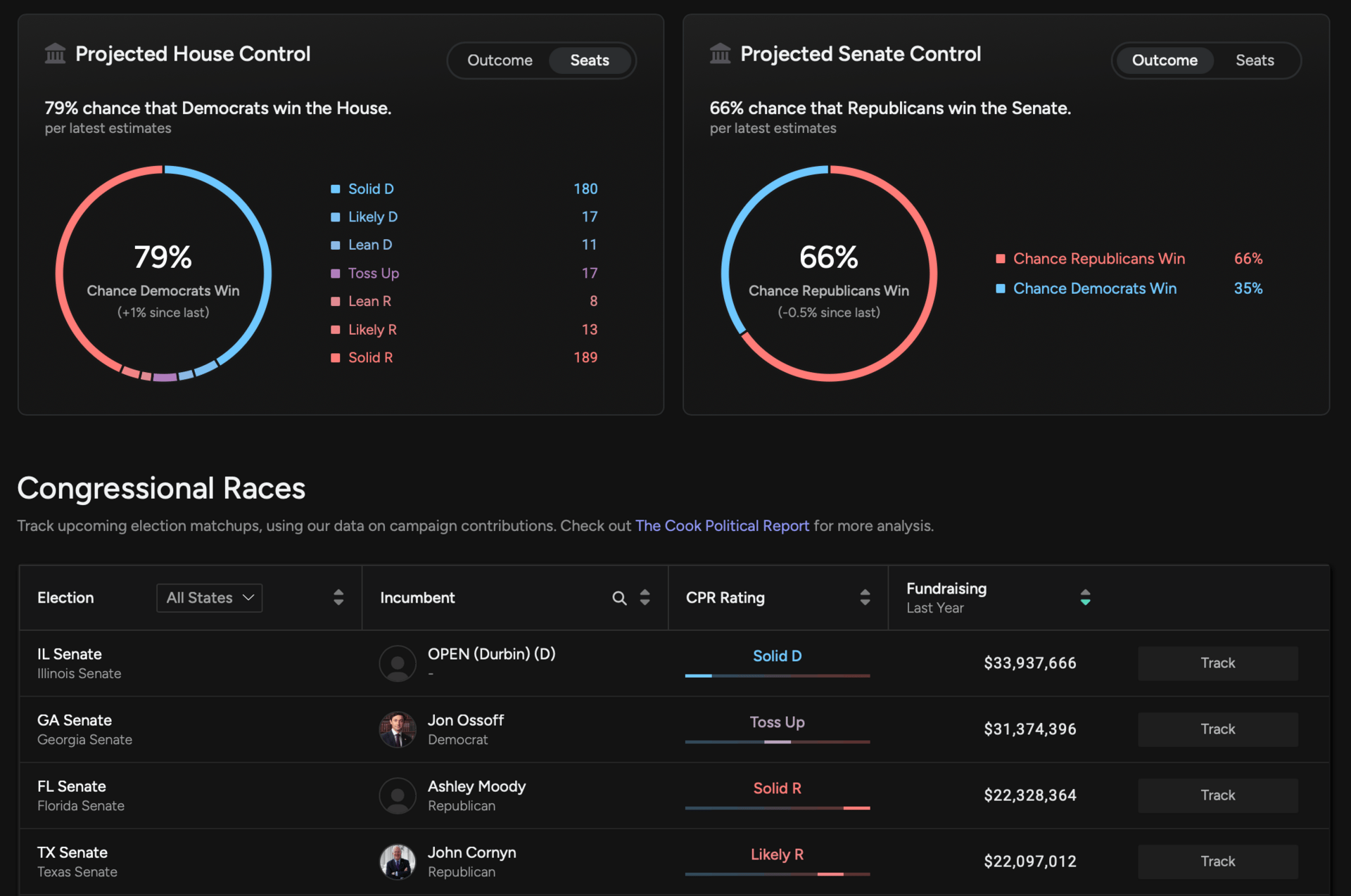
As we round the corner into the 2026 midterm elections, all eyes are on the congressional races. With all 435 districts in the House of Representatives and 33 U.S. Senate seats up for election, the midterms will determine whether Congress remains under Republican control or shifts to Democratic control. Aside from the political implications, this election is bound to also have a major impact on the stock market, and many corporate PACs have already started making big donations to influence different races.
To provide a holistic overview of election campaigning and corporate influence as we inch closer, Quiver Quantitative has launched a new dashboard to track midterm updates, from what seats in the Senate and House of Representatives are the most contested to candidates’ financial backings.
Here is a breakdown of some of the key features:
Election Projections
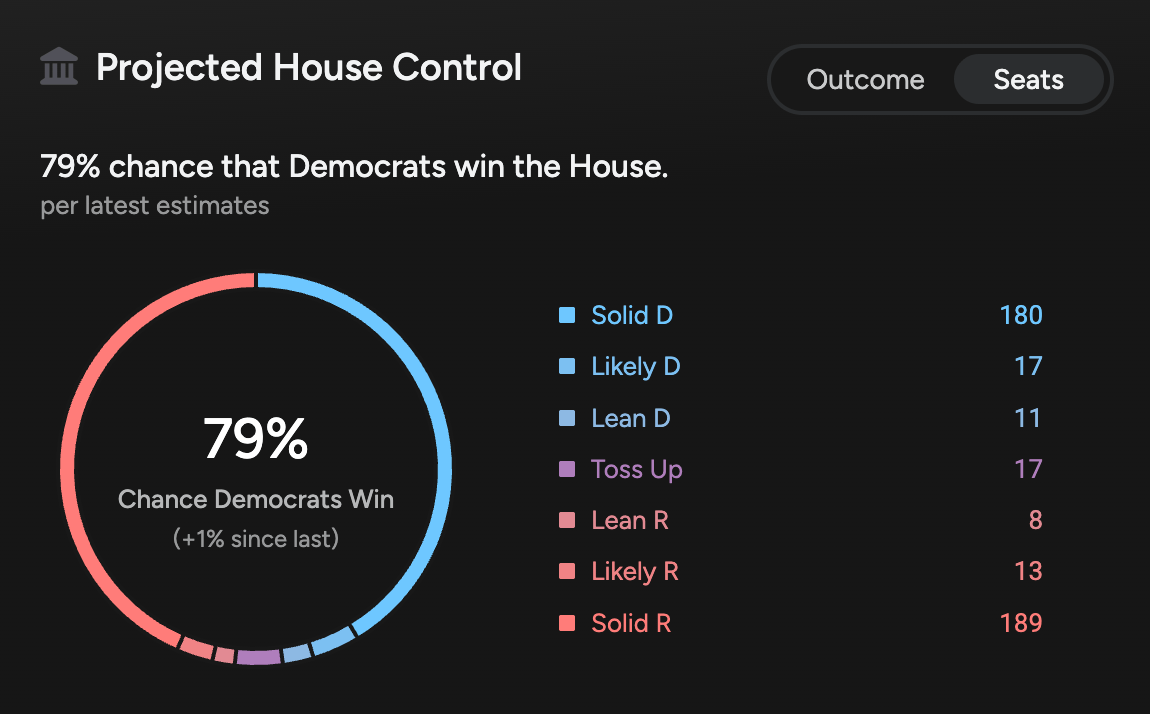
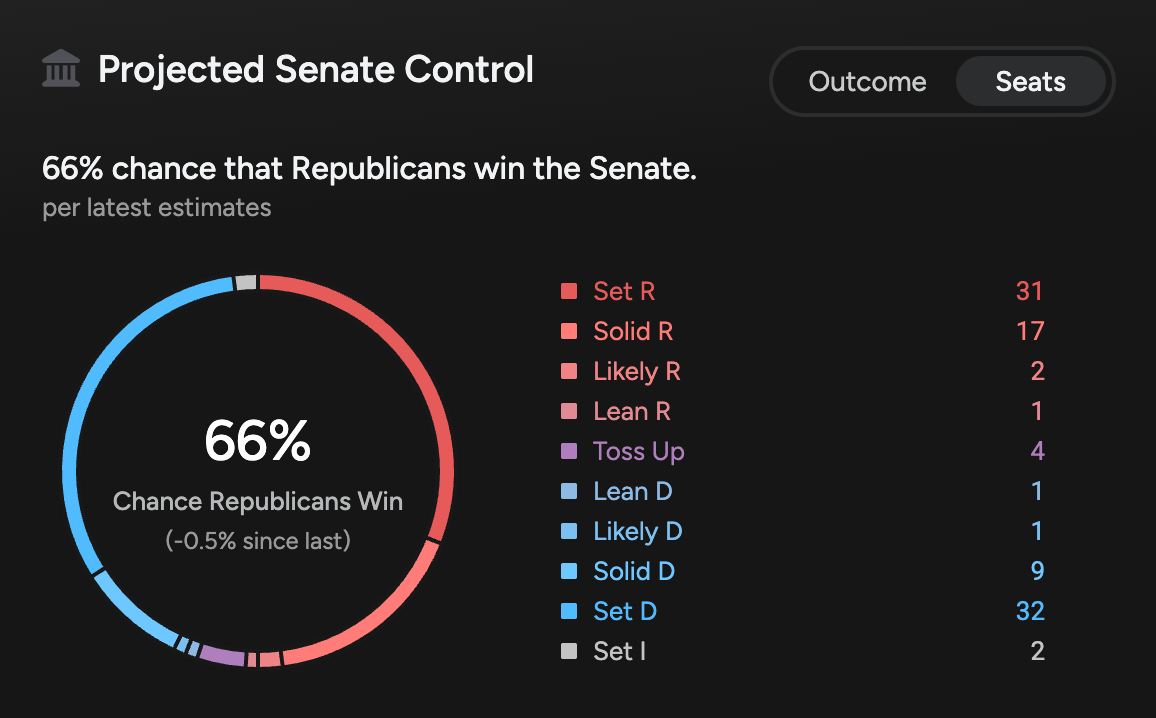
Quiver Quantitative’s dashboard includes projected outcomes of the House and Senate races, including what seats are solid Republican or Democrat, which ones are a toss-up, and, using all of that data, which party is likely to seize control. These numbers are based on implied probabilities taken from prediction markets.
These projections currently indicate that the Democrats are expected to have around a 79% chance of controlling the House after the midterms, a 50% margin over Republicans. The Senate projections swing the other way, with Republicans having a 66% chance of retaining control.
Individual Race Tracking
In addition to the projections for the overall outcomes, there is also a table to track individual matchups. If you are particularly interested in the seats identified as a ‘toss ups,’ you can see specifically what candidates are part of the more contested races. These “Toss Up” designations are based on projections from Cook Political Report (CPR).
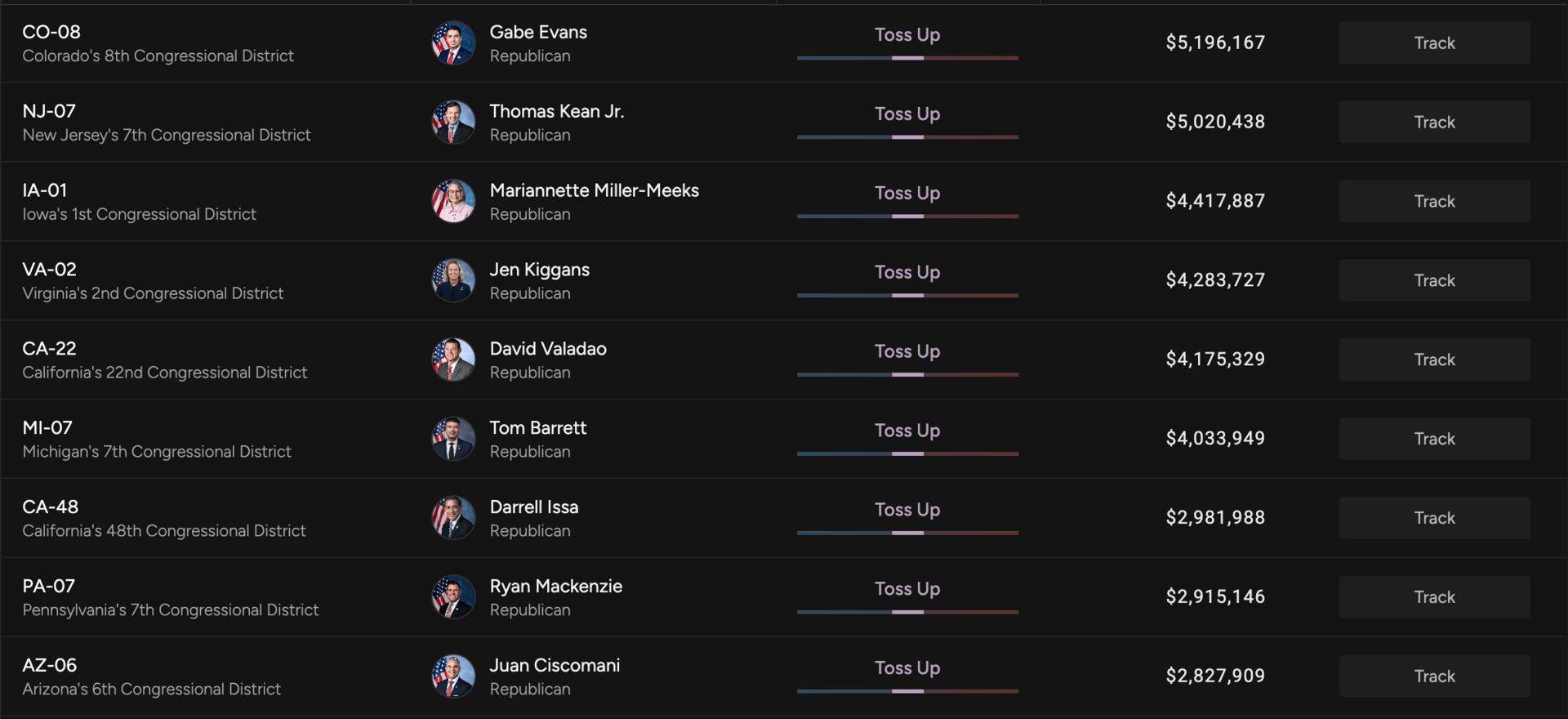
But the dashboard does not stop there. For looking into a specific congressional district, maybe to see who a politician’s opposition is, you can go into the “Track” module for a more detailed exploration of the race.
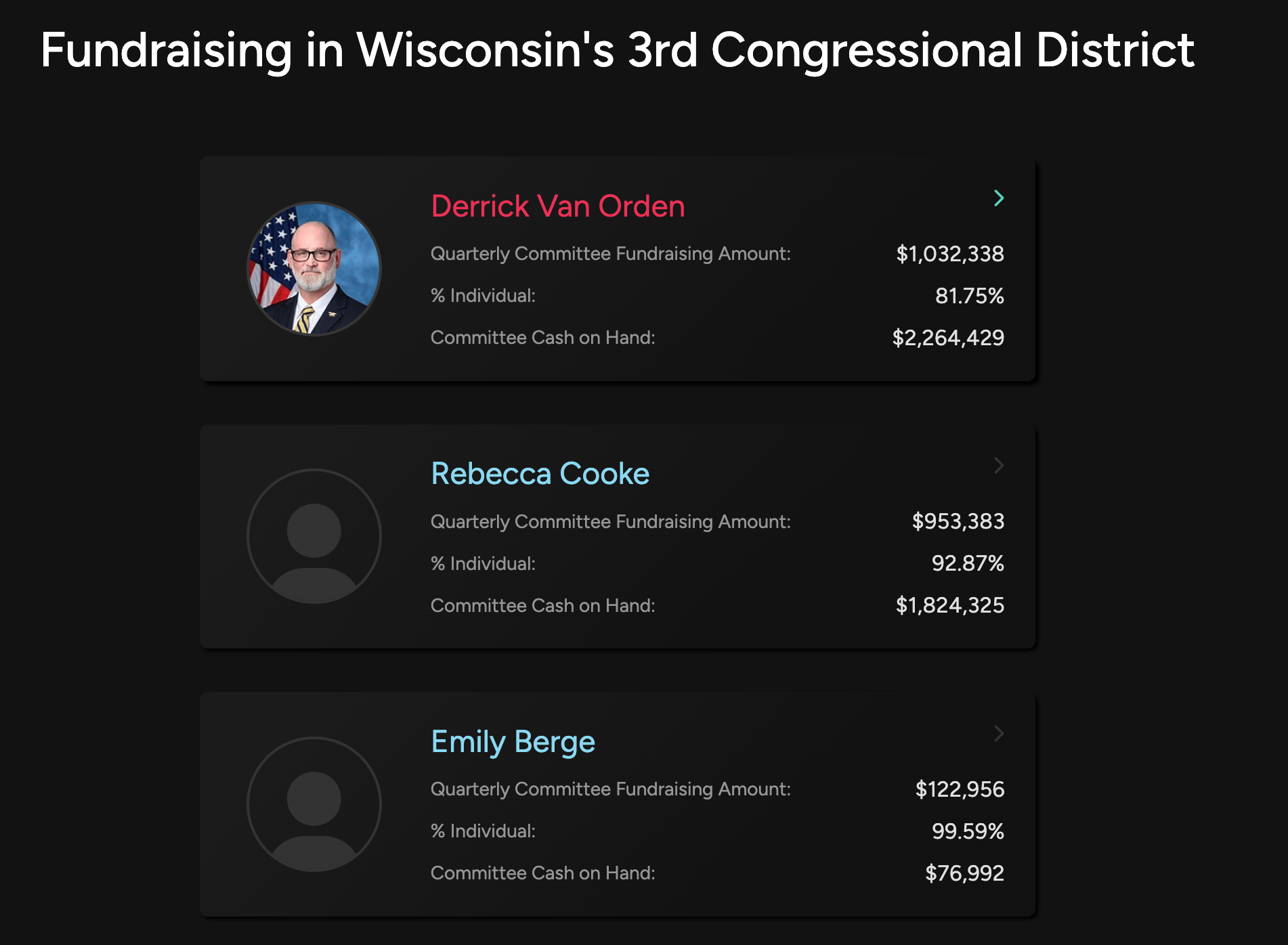
In Wisconsin’s 3rd Congressional District, for example, Quiver Quantitative’s tracking shows incumbent Derrick Van Orden compared to opponents Rebecca Cooke and Emily Berge.
This dashboard includes information on a candidate’s fundraising. The ‘Quarterly Committee Fundraising Amount’ refers to a candidate’s net funds raised by a politician in three months; the ‘Committee Cash on Hand’ refers to the unspent funds a political committee has at present. Both of these dictate the financial support a candidate has during the campaigning period, while maintaining transparency into said candidate’s backing.
Each seat up for election in the House and Senate contains a similar dashboard.

But what if there is a race that is important to pay particularly close attention to?
For example, in Michigan, Democratic Senator Gary Peters is not seeking reelection, leaving an open seat. In a state that President Donald Trump narrowly won, this race could be particularly important to watch. So, what does the financial support and breadth look like for candidates?
Quiver Quantitative’s new midterm tracking page links to a politician’s financial profile, including where they have received recent donations. Republican Candidate Michael J Rogers, for example, has a profile that lists recent donations in support and opposition of his campaign, including Corporate PAC donors.

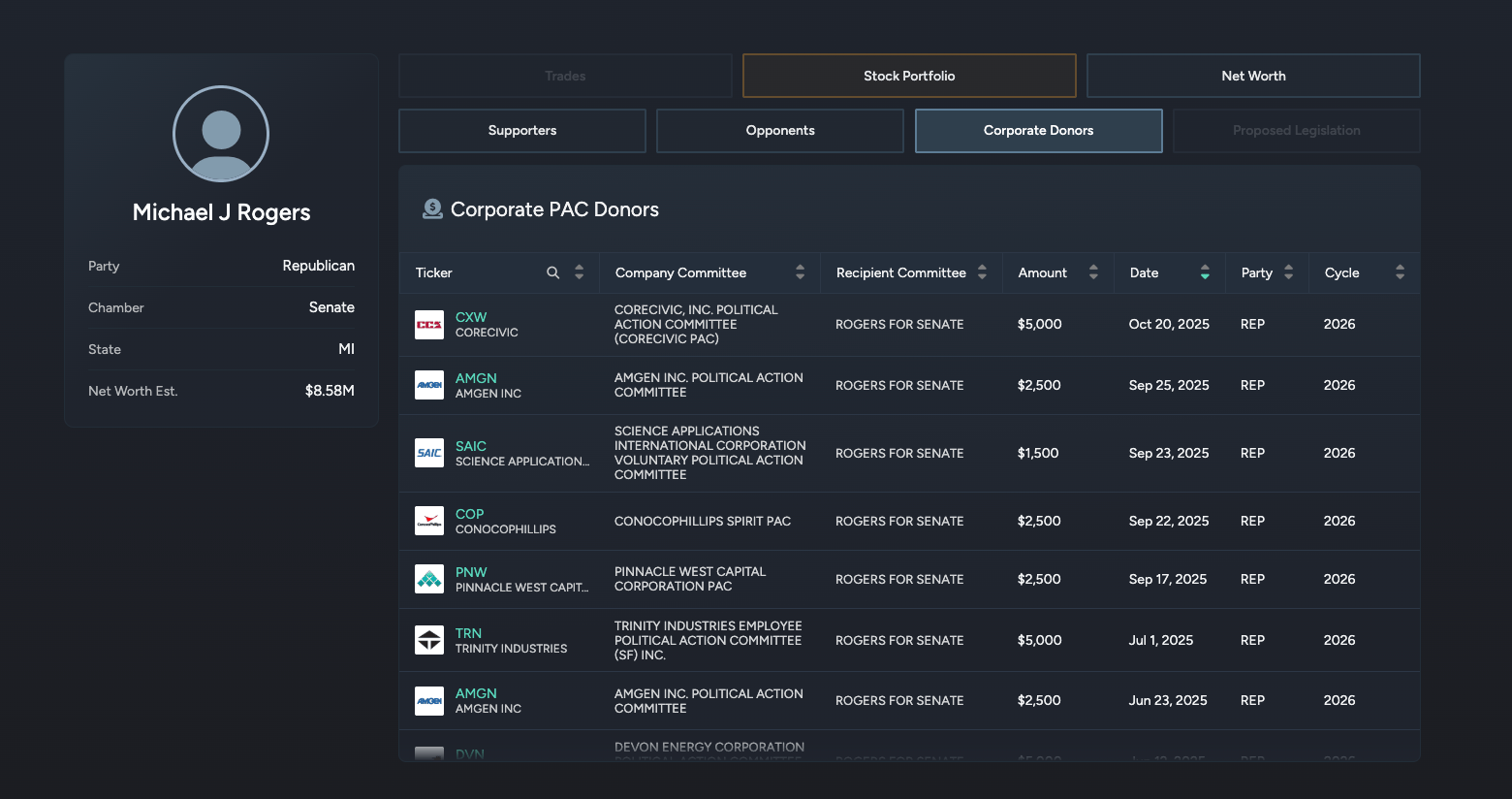
The personal dashboards connected to the 2026 Midterm Elections page can track spending in support of a campaign, including outside spending.
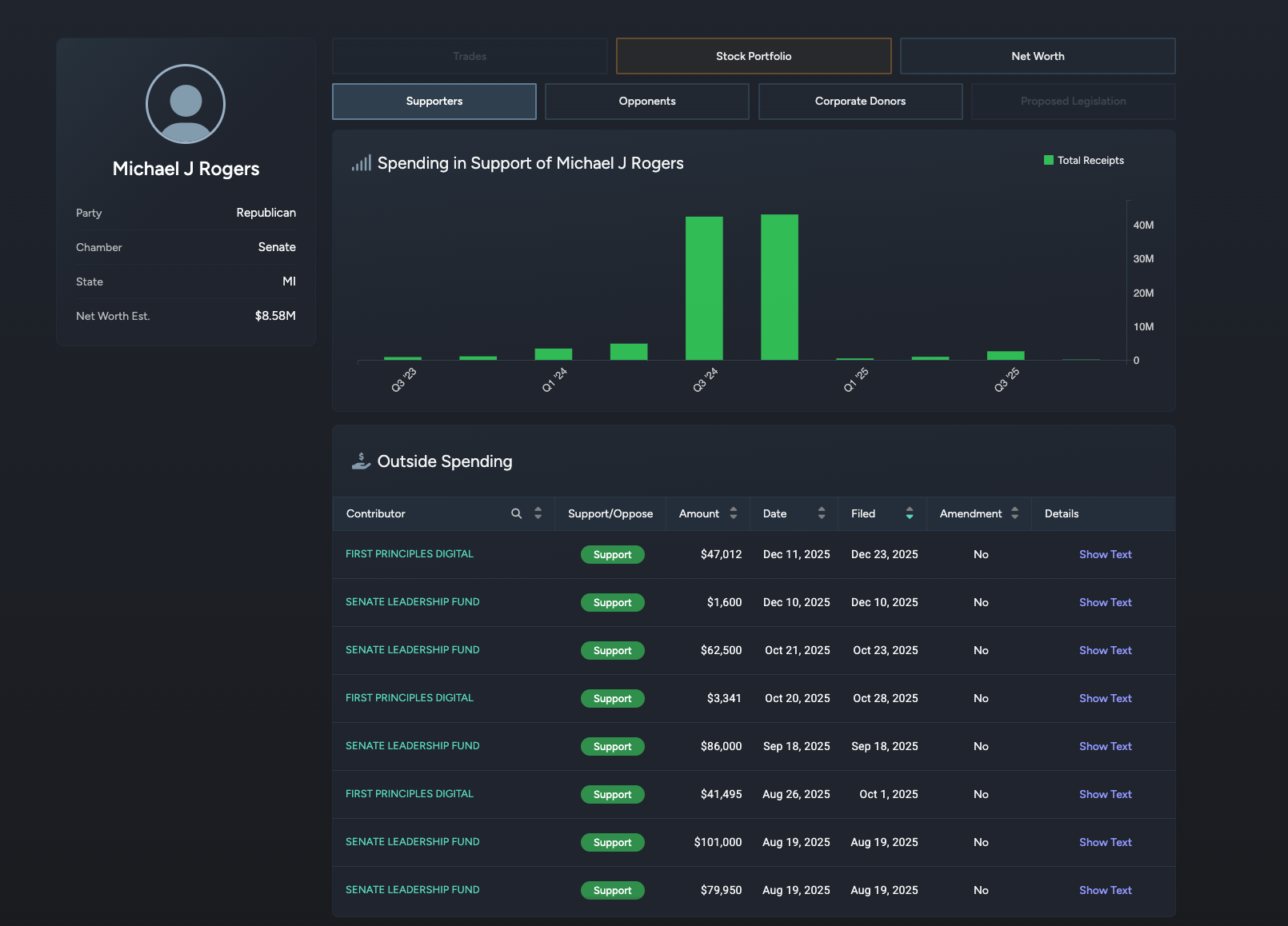
Which can then be compared to a candidates opponent…


The 2026 Midterms dashboard contains insightful clues into a candidate’s profile, including the breadth of support for their campaigns. With Quiver Quantitative’s data collected into one accessible page, you can see which direction the elections for your district may sway, or just identify key battlegrounds in a divisive political climate.
We are planning to continue adding new features to this dashboard in advance of the Midterms, so check back in as we continue to make updates. As always, please reach out to [email protected] if you have any feedback or recommendations for new features.